
What is it?
Oysters and the reefs they form are culturally and ecologically significant in Northeast Florida. These oysters do not look like what you typically find on a half-shell in a restaurant.
They form thick clumps within the estuary that are exposed at low tide and surrounded by marshes and mudflats. They provide habitat for fish, prevent shoreline erosion, improve water quality, and are a food source for many animals, including humans.
Within the GTMNERR, scientists have determined that oysters filter over 60% of the estuary water volume every two weeks. Staff researchers and volunteers monitor a set of oyster reefs within GTM every winter to monitor their condition and assess changes.
Additionally, NERRs along the South Atlantic coast are working together to develop a way to use unmanned aerial vehicles, a.k.a. “drones,” to monitor oysters on a larger scale.
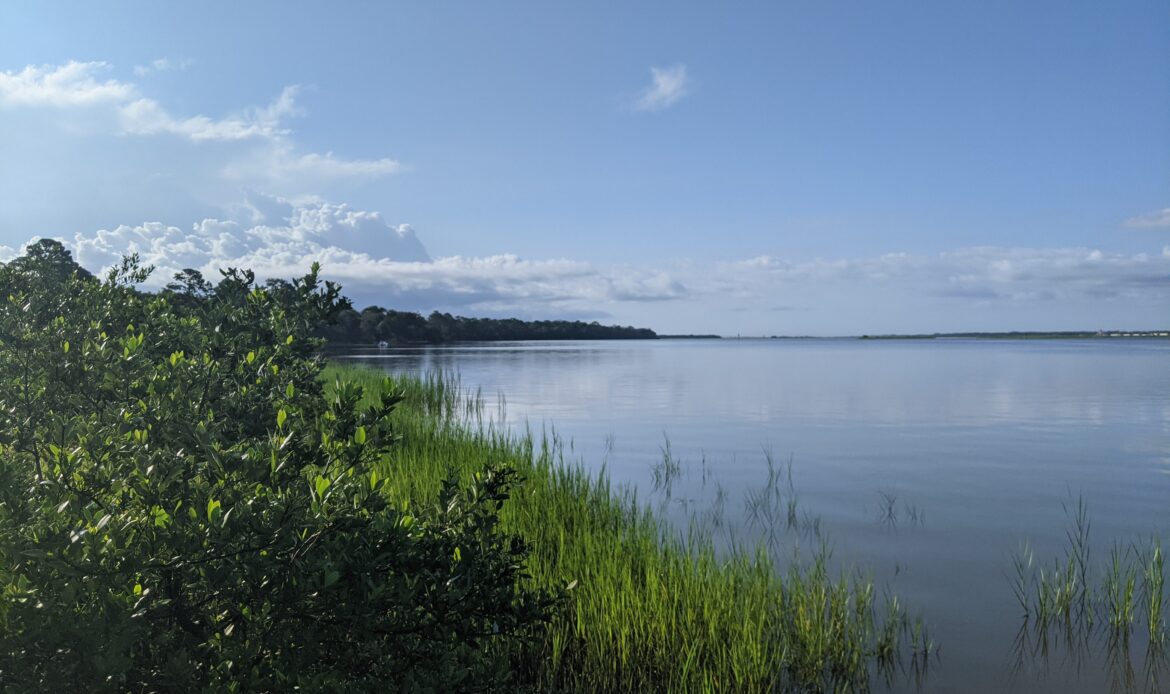
Walk out to Shell Bluff and view the salt marsh. It provides food and habitat for many plants and animals, plus one of the most complex food webs of any ecosystem (habitat = the natural home of an animal, plant or other organism). Shrimp, crabs, worms, insects, birds, plants, fish and oysters are among the creatures found in the salt marsh.