
- The Estuary Examiner
- Fall 2026
- A Ride-Along with Sea Turtle Patrol
By Kim Bradshaw
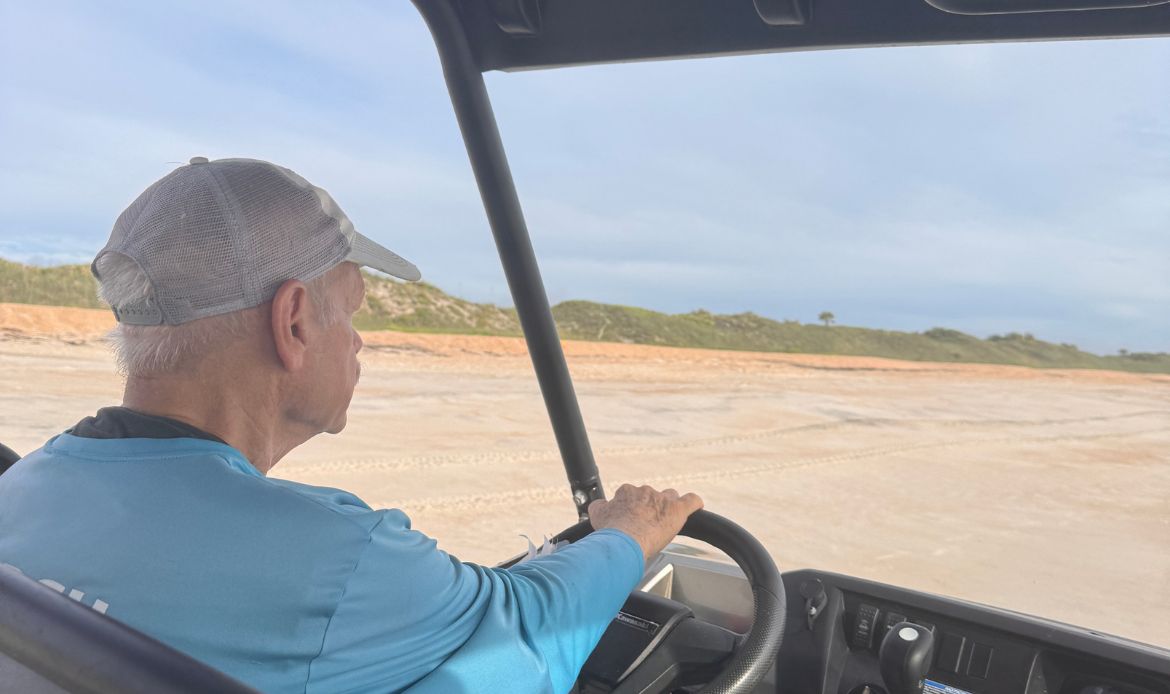
Sea Turtle Patrol volunteer Jeff Finnan heads out on the beach at first light.
Before sunrise, while most of us are still easing into the day, Sea Turtle Patrol volunteers Mike Darragh and Jeff Finnan are already at work.
Their morning began with a list of eight nest evaluations—a busy assignment by any measure. During sea turtle nesting season, each marked nest must be carefully checked at the appropriate time to see what happened after hatchlings emerged. It is detailed, hands-on work that requires patience, observation and care.
But on some mornings, the work brings more than data.
Reading the beach
A patrol morning is part science, part fieldwork and part instinct built from experience. Volunteers read the beach for tracks, disturbed sand and other signs that help tell the story of what happened overnight.
Several of the nests Mike and Jeff checked showed signs of emergence, meaning hatchlings had made their way out of the nest and headed to the ocean.
At one nest, the timing was especially memorable: the emergence had happened only moments before, and two baby sea turtles were still making their way toward the water.
It was a fleeting moment, but one that captured the heart of sea turtle patrol work—being present not only for the monitoring and documentation, but also for the extraordinary sight of new hatchlings beginning their journey to the sea.

Mike Darragh and Jeff Finnan conduct a nest evaluation on the beach, carefully documenting what remains after hatchlings have emerged.
What happens during a nest evaluation?
Once a nest has had time to hatch, trained volunteers return to excavate and evaluate it. They carefully open the nest chamber and document what they find, including hatched eggshells, unhatched eggs and any hatchlings that may still be in the nest.
These evaluations help Sea Turtle Patrol better understand nest success and provide important information about the nesting season overall.
By the end of the morning, Mike and Jeff had worked through all eight nest evaluations, moving from one marked site to the next and recording their findings along the way.

Eggshells from a completed nest evaluation are counted and recorded. Each shell helps tell the story of the nest’s success.
Behind the scenes: What’s with the red stakes?

Before patrol work begins on the beach, supplies have to be prepared. Sea Turtle Patrol volunteer Mike Darragh readies red stakes used to mark and identify protected nest sites.
One of the details people often notice on the beach is the line of red stakes marking a sea turtle nest.
Those stakes are part of the behind-the-scenes system that helps patrol volunteers identify, monitor and protect nests throughout the season. Along with posted signage and flagging tape, they mark the nest location and help ensure the site is easy to spot for future checks and evaluations. They also signal to the public that the area is protected and should not be disturbed.
In other words, those red stakes may look simple, but they play an important role in the daily work of sea turtle conservation.
The work behind the wonder
Sea turtle patrol involves much more than the magical moments people sometimes see in photos. It includes long mornings, careful recordkeeping, setting and checking markers, evaluating nests and paying attention to countless small details.
And yet, those details matter.
That’s the beauty of a ride-along with Sea Turtle Patrol. Behind every marked nest, every red stake and every early-morning check is a story of dedication, stewardship and hope.
Help protect sea turtles.
Adopt a nest for 2027. Your support helps Sea Turtle Patrol monitor nests and protect sea turtles at GTM Research Reserve.